
Anybody who has attempted wood and epoxy (or resin) boards has researched the best way to do this. We spent years honing our homemade forms using melamine boards and Tyvek tape. We weighted them down with everything from jade bookends to 5 lb dumbbells (now all covered in epoxy). We had our fair share of leaks from poorly sealed and overused forms. We knew there had to be a better way and we were finally ready to shell out some money for pre-made forms that promised to make our epoxy/wood lives easier.
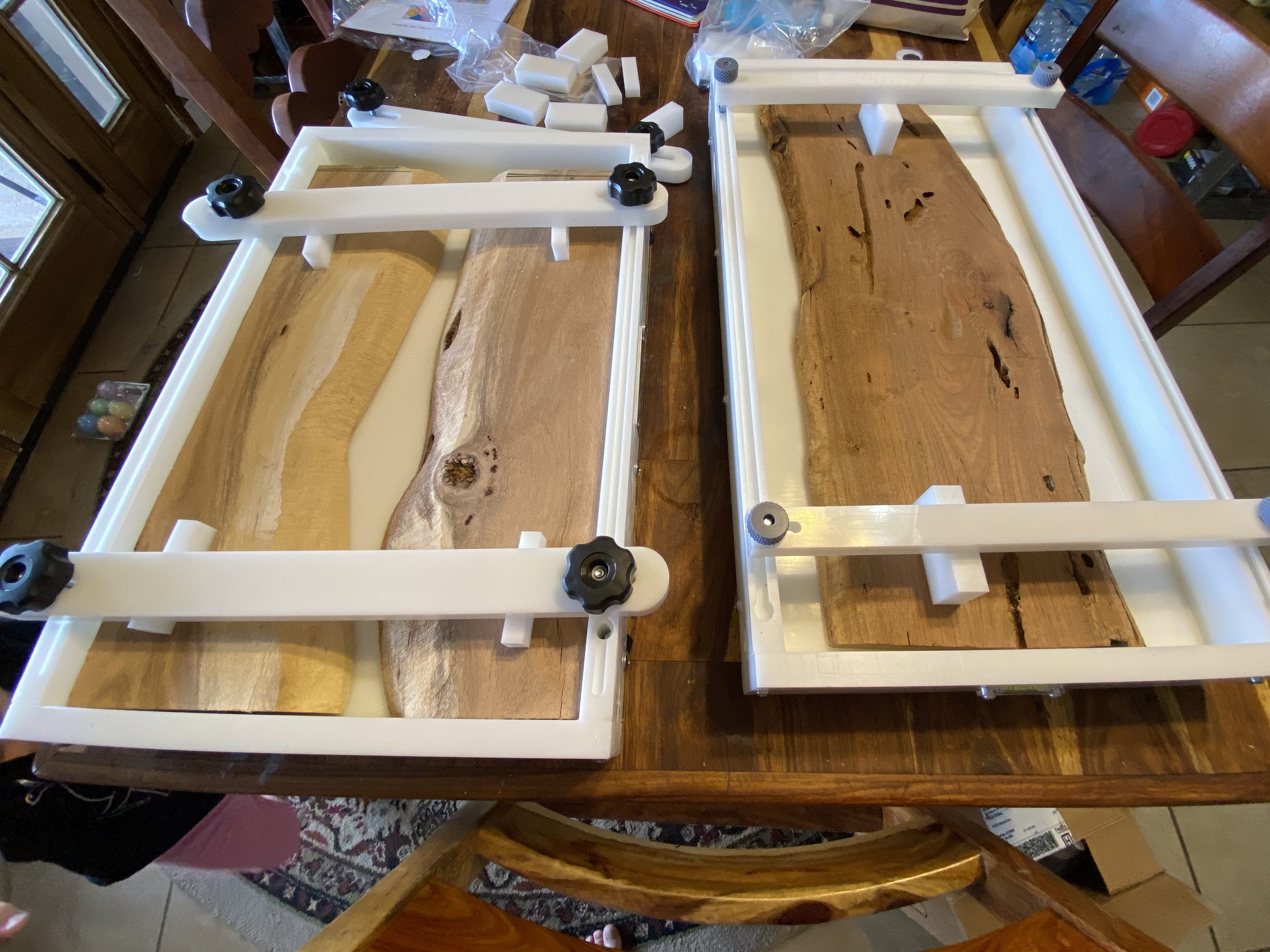
First we purchased a 24″x12″ form from Slabology Woodworks for about $189 including tax and shipping. Unfortunately it took about 2-3 weeks to receive. We got antsy and ordered a 20.5″x12″ form from Ahonui Artisans for $239, which took 2-3 days to arrive. They both showed up on the same day and we were excited to have multiple pours going at once.

First Impressions
We opened both up and here are some of the things we noticed. Both had screw on leveling feet with levels on the front and one side. Now we know our form is level! (This is a big deal that has caused us problems with our own forms in the past). The form from Ahonui Artisans came with 3 – 1.5″ crossbars to hold the wood in place. Slabology Woodworks came with 2 – 1″ crossbars. Both came with an assortment of spacers to go between the wood and the crossbars.
Slabology’s form came with a tube of the silicone they recommend using for the removable ends. Ahonui’s form did not, but recommended the same silicon and came with coupons for pigment. Both forms are labeled with the company’s name, Ahonui’s is a bolted on plague and Slabology’s is a nice sticker (obviously this does not impact the usability of the forms).
Time to Pour
Bryant selected mesquite to make charcuterie boards and put them in both of the forms. We tightened them (but not too tight) with the spacers and crossbars. We used turquoise mica powder (from Just Pigments) and SuperClear Epoxy. We carefully measured the 2 parts of epoxy, mixed them well, and started to pour. It took 2-3 pours to complete the boards.
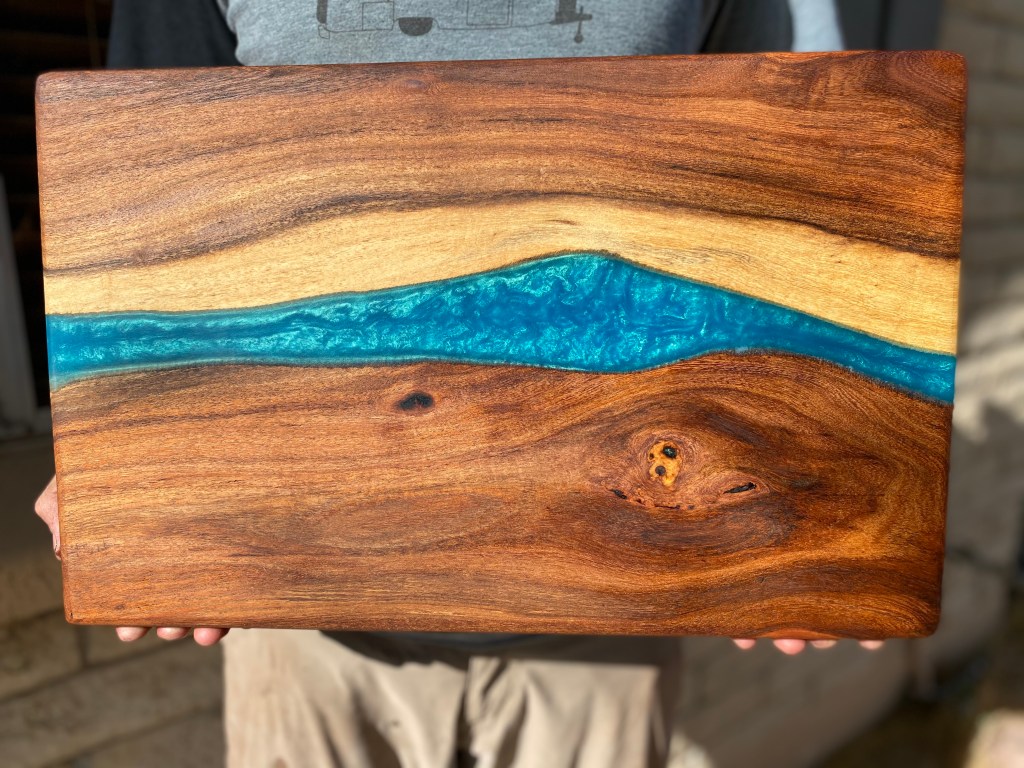
Once the pours were hardened and all the holes were filled, it was time to put up or shut up. Taking the boards out of the forms is the most exciting, stressful part of making wood and epoxy boards. Will the board come out or will it break? Did everything get filled? Will we break the forms to get the board out?
We carefully removed the screws holding in the ends of both of the forms. The Slabology form had 6 washers (3 on each side) that came out with the screws. The Anohui form has the washers built in so we didn’t have to keep track of the washers, a definite plus. Up next, we had to pry the boards out. With a little bit of finessing, we were able to get the board out of the Ahonui form with no damage to either the board or the form. The board in the Slabology form was more difficult to get out but we managed. After planing, sanding, routering the edges, and finishing with Odie’s Oil, the boards were complete and Instagram ready. In fact, we sold the board from the Ahonui form within half an hour!

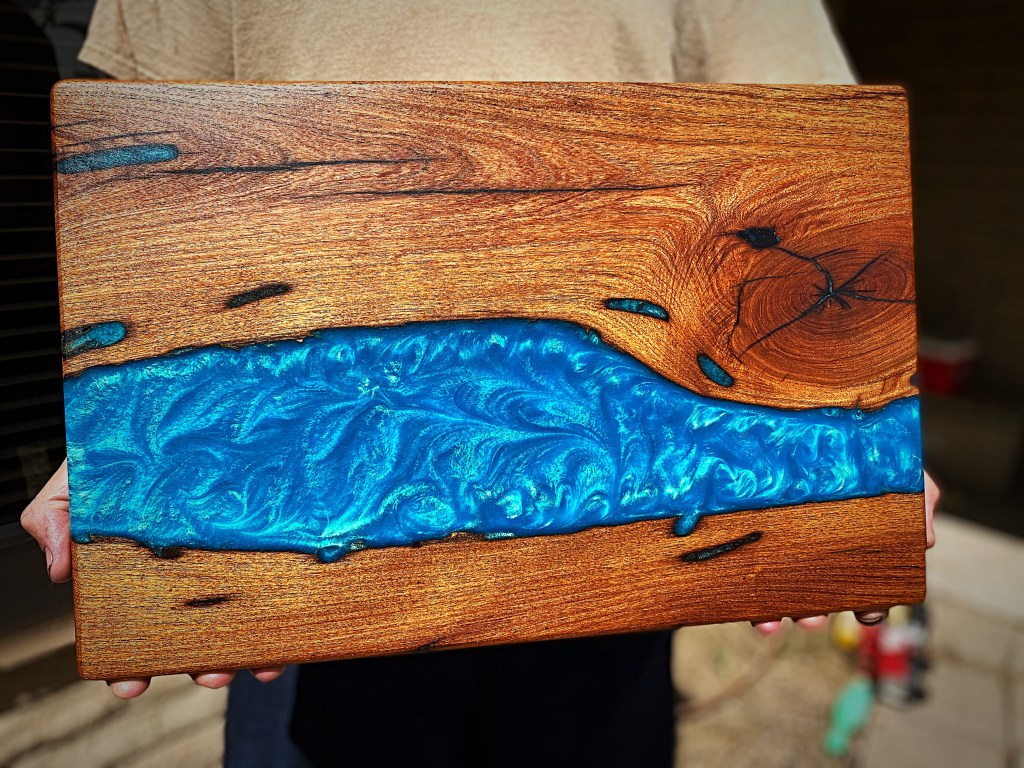
After we cleaned the silicone off the form edges, we applied another coat of silicone and re-assembled the forms (and didn’t lose any of the washers from the Slabology form!). After letting the silicone dry, we immediately got more wood ready and made 2 more boards. We were hoping that we would have better luck removing the board from the Slabology form but had similar issues and even scratched the bottom of the form. It is still useable but we were bummed to have scratched our new form.

Final Thoughts
Both of these forms are a huge upgrade from the melamine and tape forms that we built in the past. The Slabology form is larger and less expensive than Ahonui’s form, but did take longer to arrive. As mentioned in the post, there are several differences but the most meaningful difference is the difficulty we have had removing the completed board from the Slabology form. The Ahonui Artisans board is a higher quality and worth the extra money (and less time); in fact we already purchased another one.
 Live Edge Wood Slabs Boards